Hazel Kim

Hazel Kim

User Experience

Case Study

June 3, 2026

Making Emotional Support

More Actionable

A UX Case Study of Wysa with Comparative Insights from Headspace and Finch

An illustrative sketch of a flower

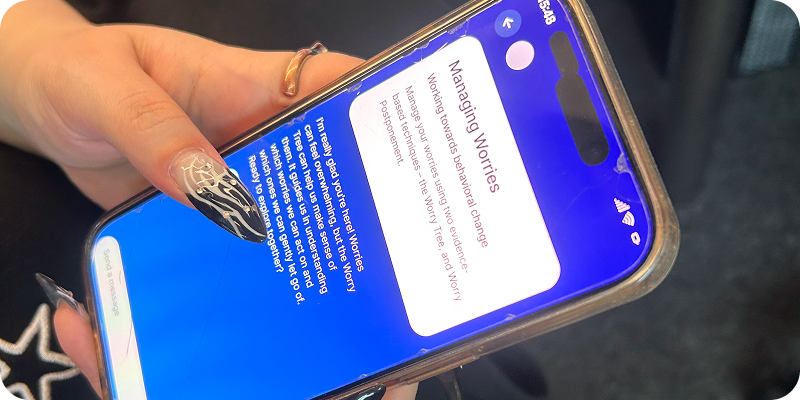
How might we help emotionally overwhelmed users receive support without requiring too much effort?

This case study examines emotional support flows in digital wellbeing apps, with a focus on Wysa, an AI-powered conversational wellbeing platform.

The case study presents the existing user flow, identified UX problems, proposed improvements, user testing, and reflection.

Why I choose Wysa

The mental wellbeing market arise rapidly in the recent.

Also, current services turns into AI-assisted flow inside the service

and provide much easier experience for users.
Wysa

AI-powered mental health and wellness app

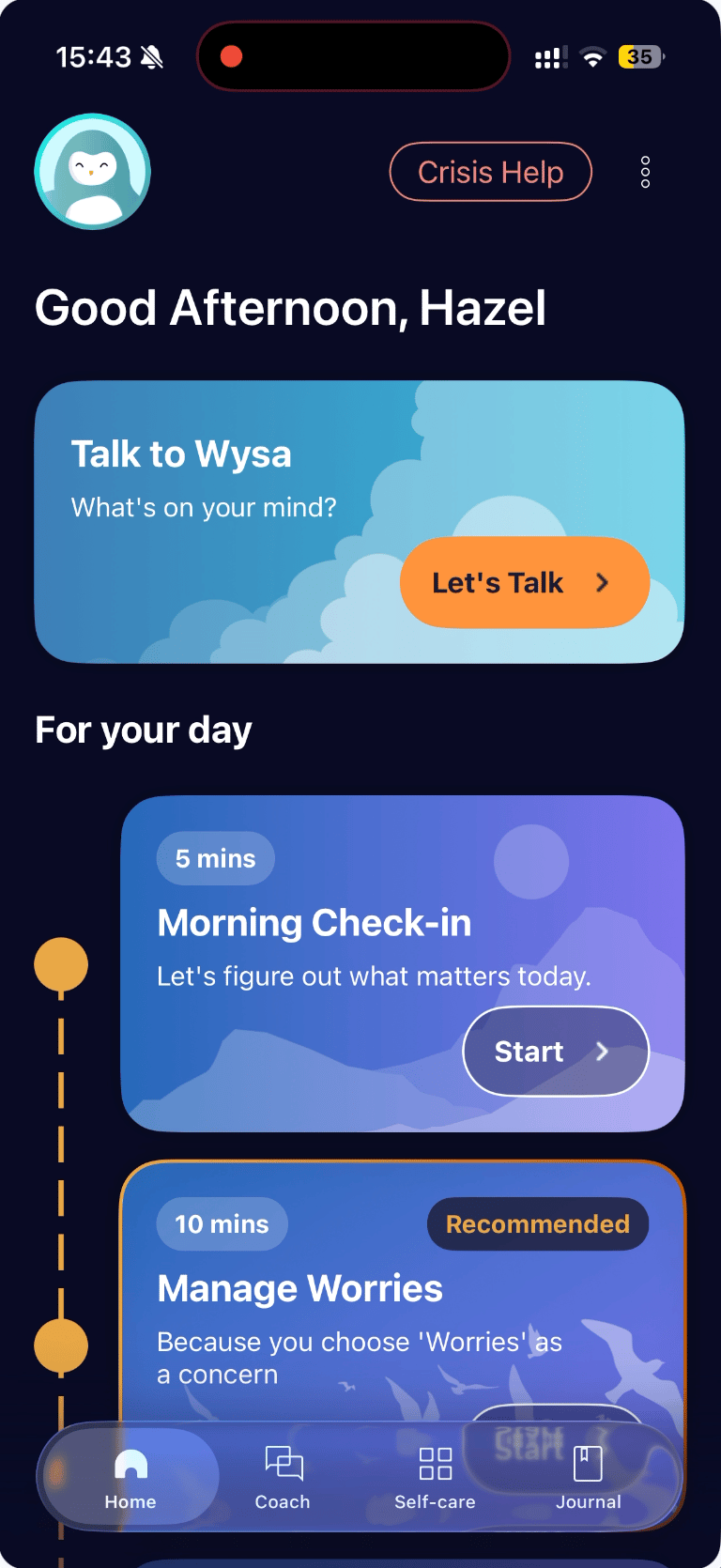
Wysa is an AI-powered emotional wellbeing chatbot designed to provide users with a private space to talk through thoughts and emotions.

Through text-based conversation, the service responds to users’ concerns and offers tools intended to support emotional regulation, and everyday mental wellbeing.

Light Market Context:

Digital Mental Health

  • Wysa

    AI-powered emotional support through guided conversations.

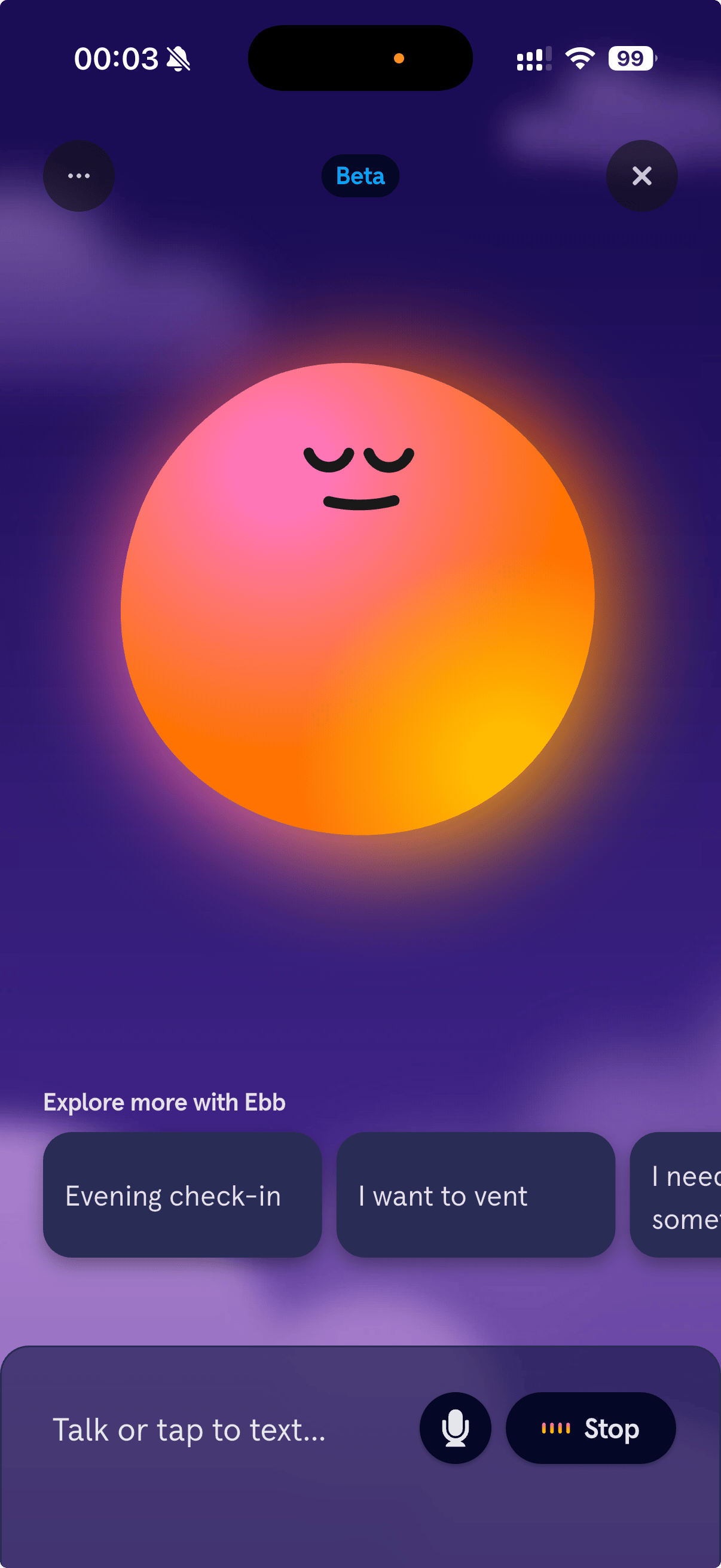
  • Headspace

    Mindfulness and sleep support through guided content.

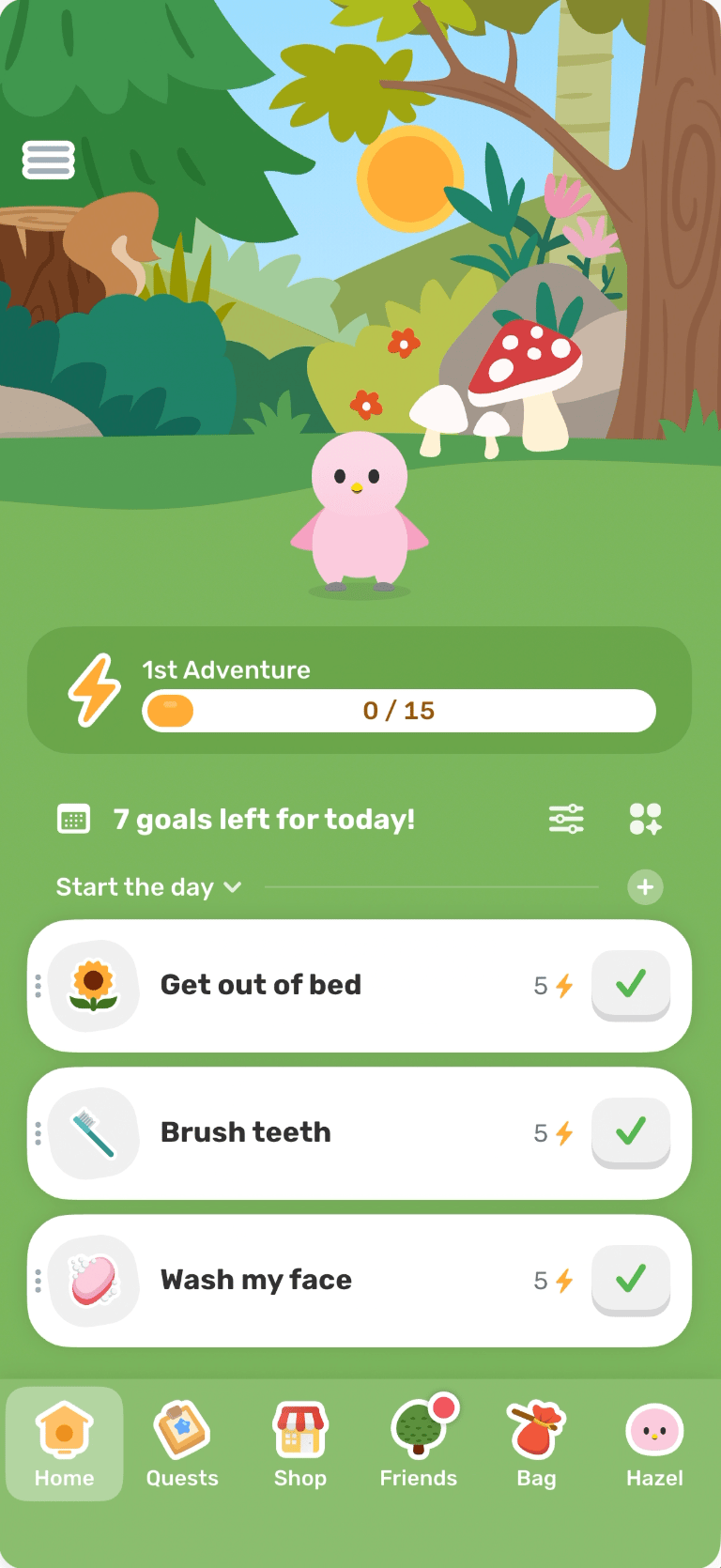
  • Finch

    Gamified self-care through daily goals and virtual rewards.

  • Existing Feature Flow

    AI conversation · Guided self-care tools · Optional human support

  • Main Features

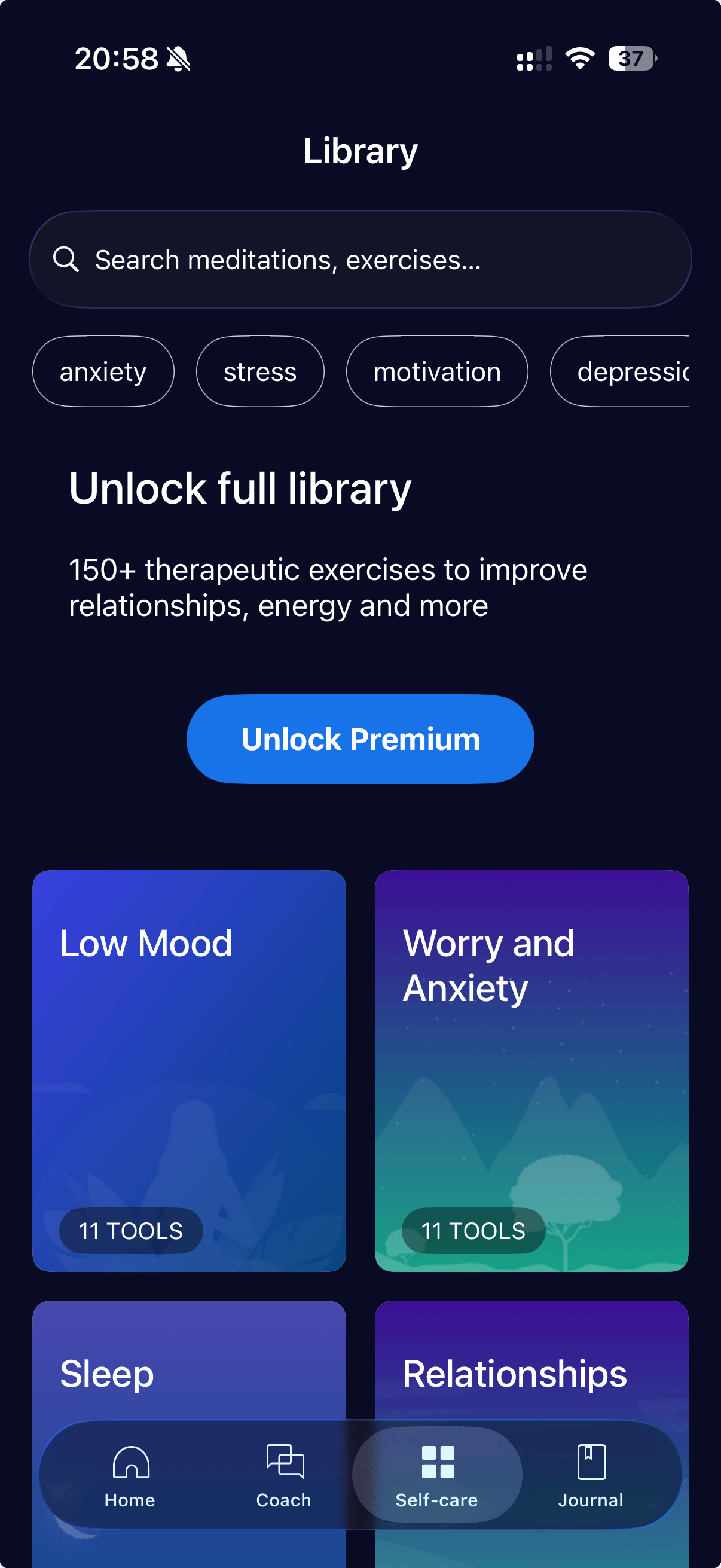
    The home screen suggests guided activities

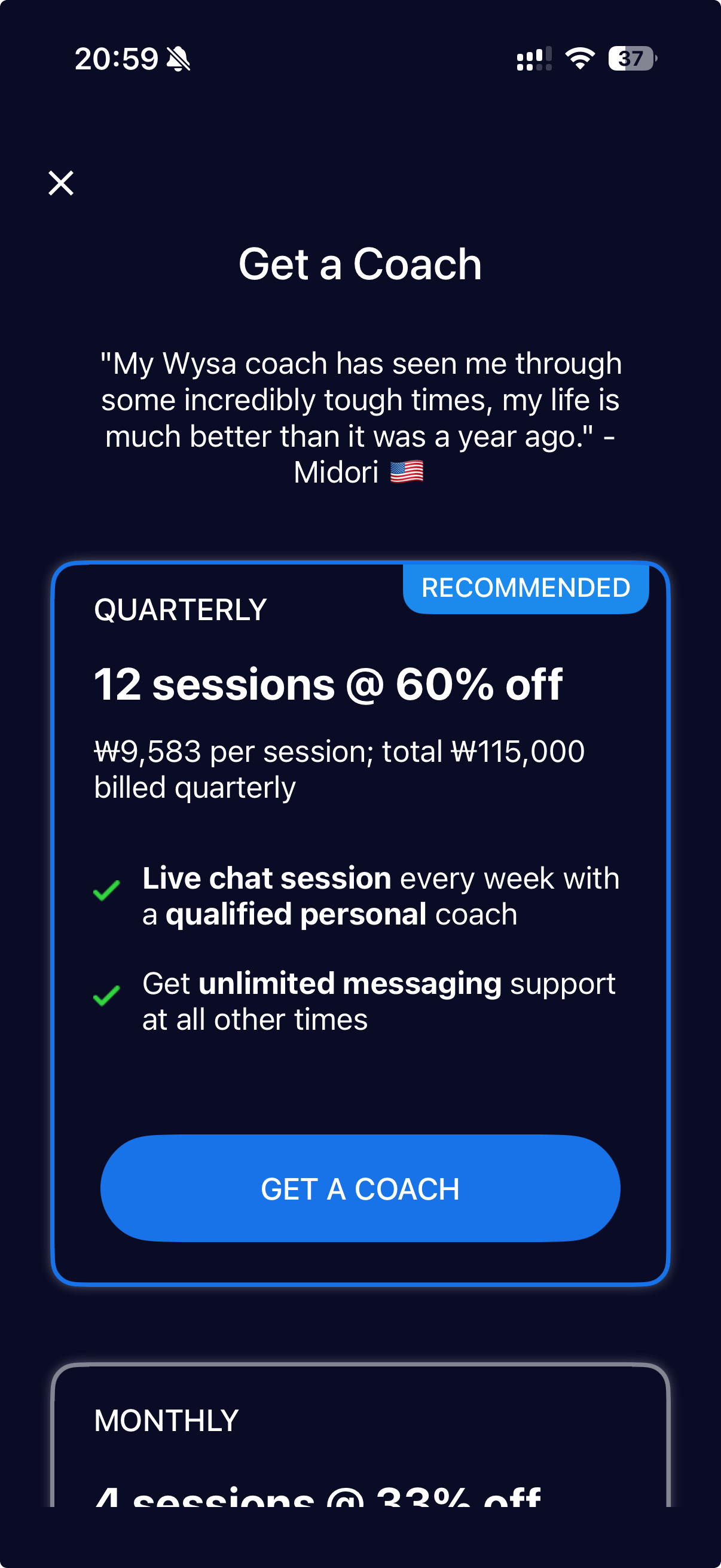
    Coach

    Offers access to trained coaches.

    Check-in

    Helps users set daily anchors in the morning and reflect on their mood in the evening.

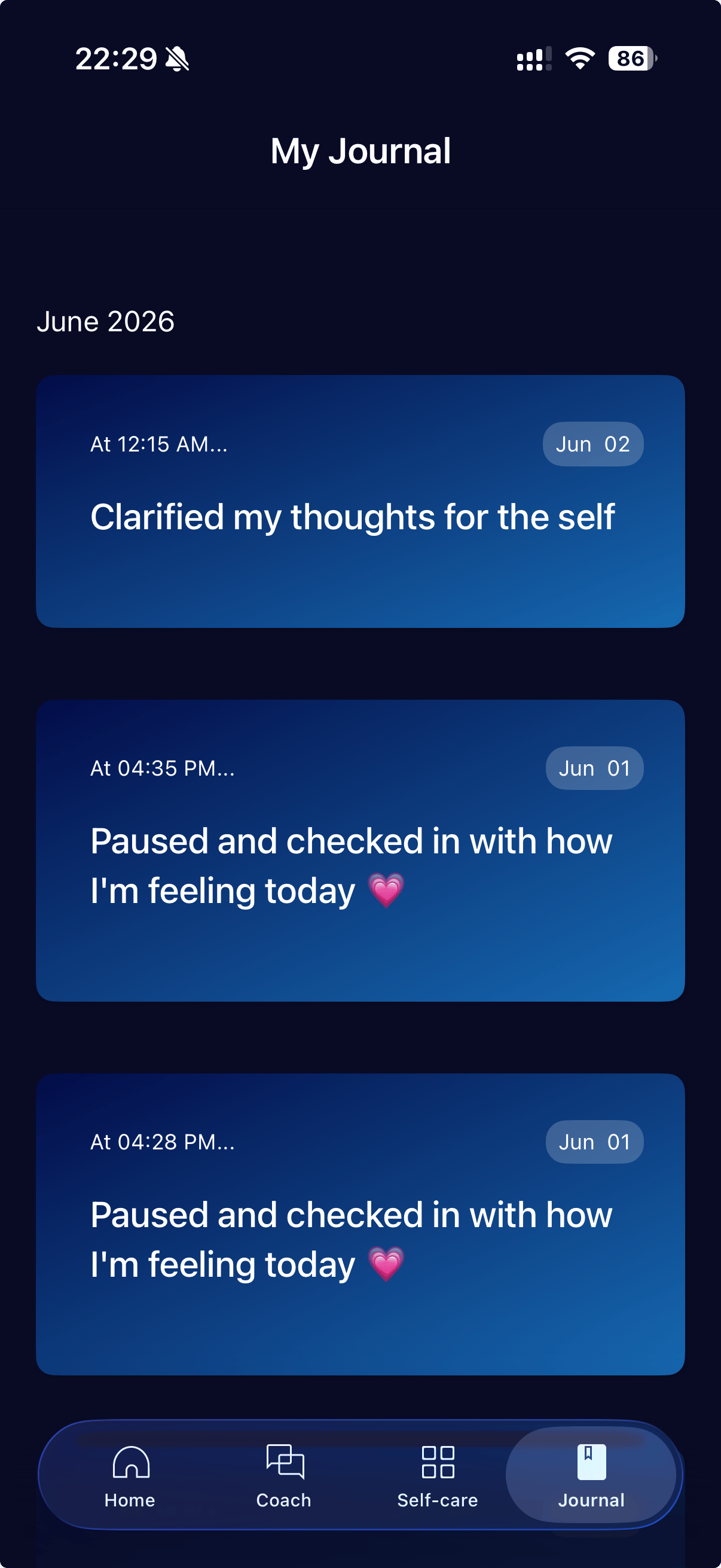
    My Journal

    provides summary of conversations

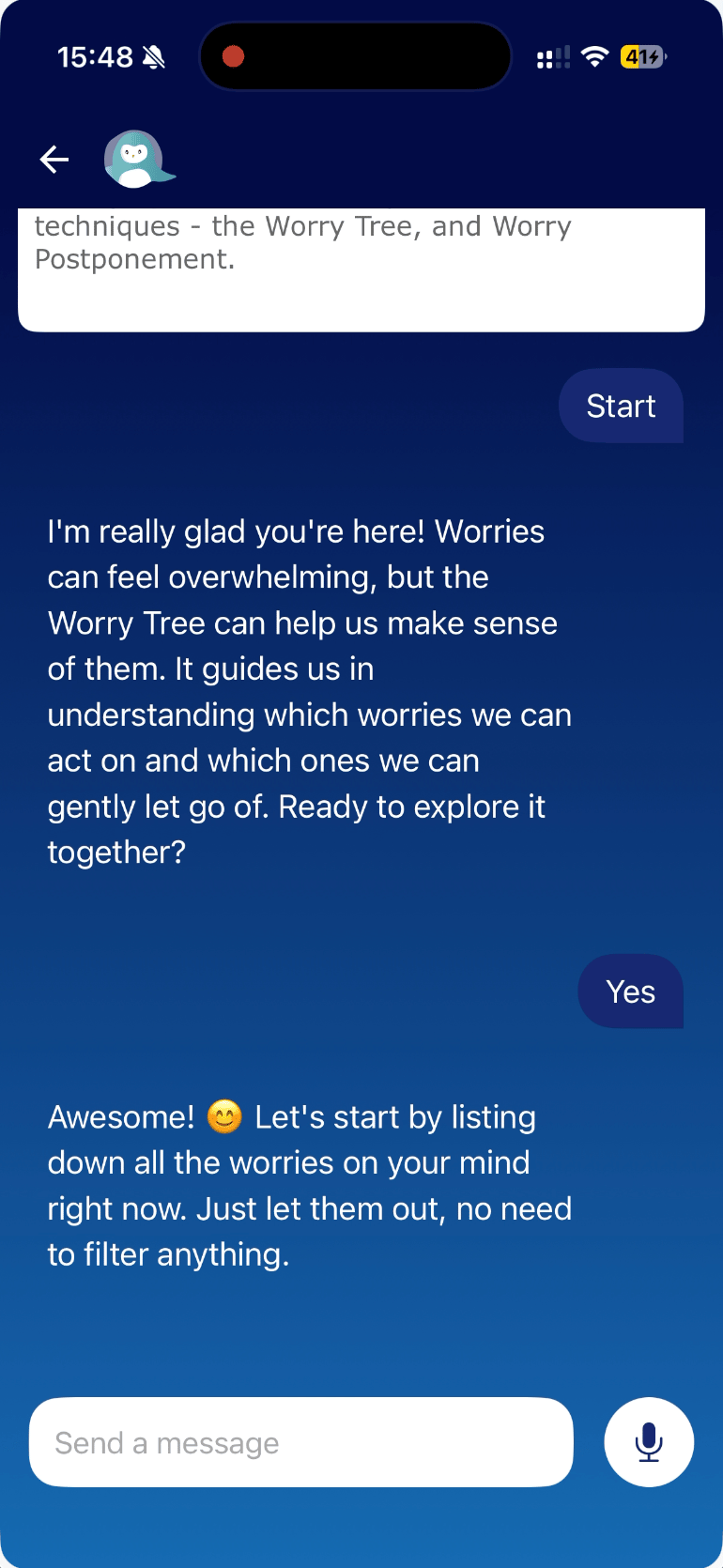
  • AI conversation

    Wysa basically provides the guide how to manage thoughts and feeling in the every functions.

    Check-in

    Helps users set daily anchors in the morning and reflect on their mood in the evening.

    2. Give specific explanation

    3. Get self-care routines

Problem Space

Endless Conversation

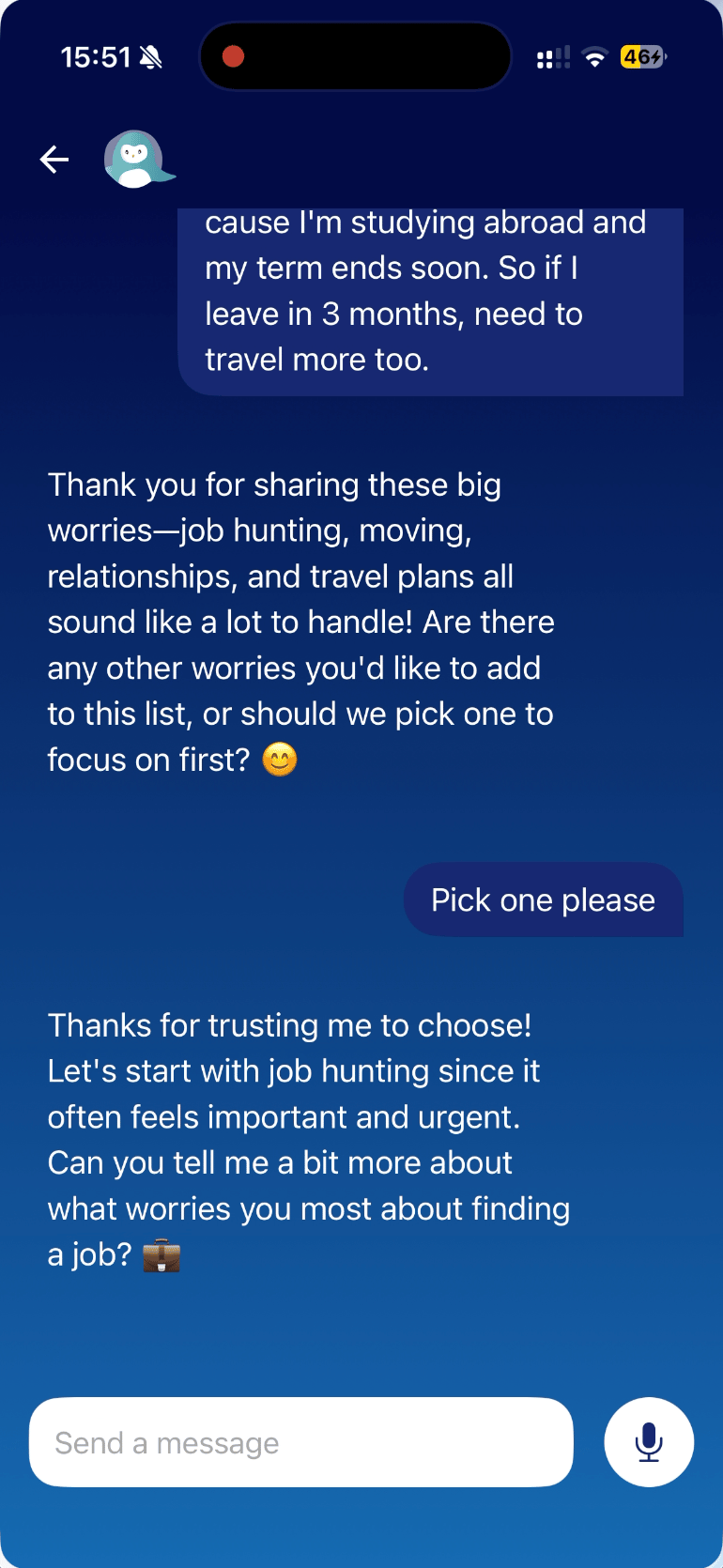
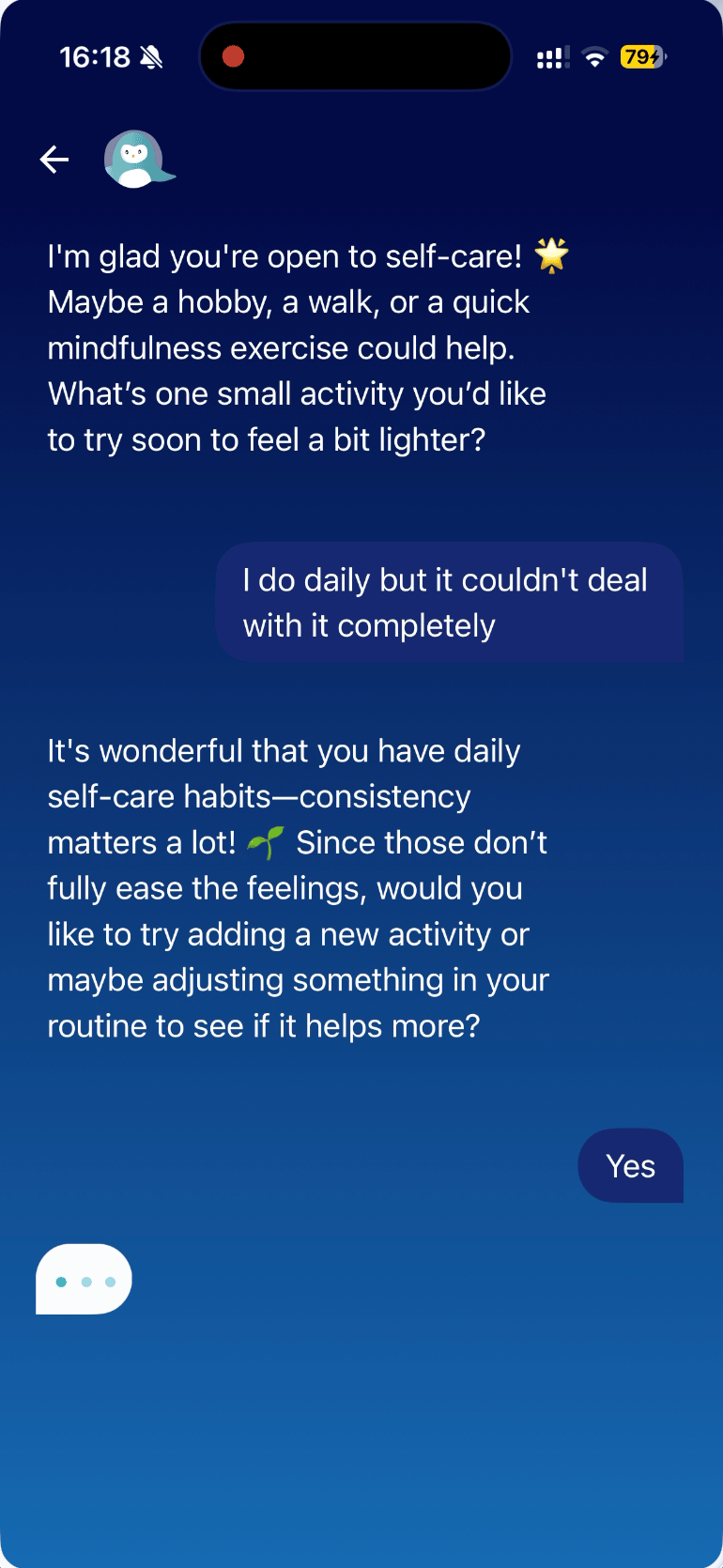
Wysa encourages users to reflect on their emotions through text-based conversation. While this can support self-awareness, the interaction may become cognitively demanding when users are already emotionally overwhelmed.

The chatbot often asks users to continue explaining their feelings or generate their own solutions. This approach may work for users who want deeper reflection, but it can feel repetitive or frustrating for users who do not have the energy to think extensively.

This case study explores how emotional-support flows can become more flexible by allowing users to choose how much effort they want to invest and what type of support they need in the moment.

Emotional Limitations of AI

Wysa provides an accessible space for users to reflect on their feelings, but AI responses sometimes feels impersonal and repetitive.

UX Principle: User Control and Freedom

Limited Support Options

Users may need different types of support depending on their emotional state. Some may want to talk freely, while others may prefer rest or a simple task. However, the current flow does not clearly distinguish between these needs. So when I felt tired, just small responding was also so much burden.

UX Principle: User Control and Freedom and Visibility, Hick’s Law

Opportunities

Support Mode

Allow users to choose whether they want a practical next step, or a deeper reflection.

Suggest Options

Introduce options to help users access relevant support more quickly.

Encourage Actions

Provide the tasks based on the conversation, not just a summary.

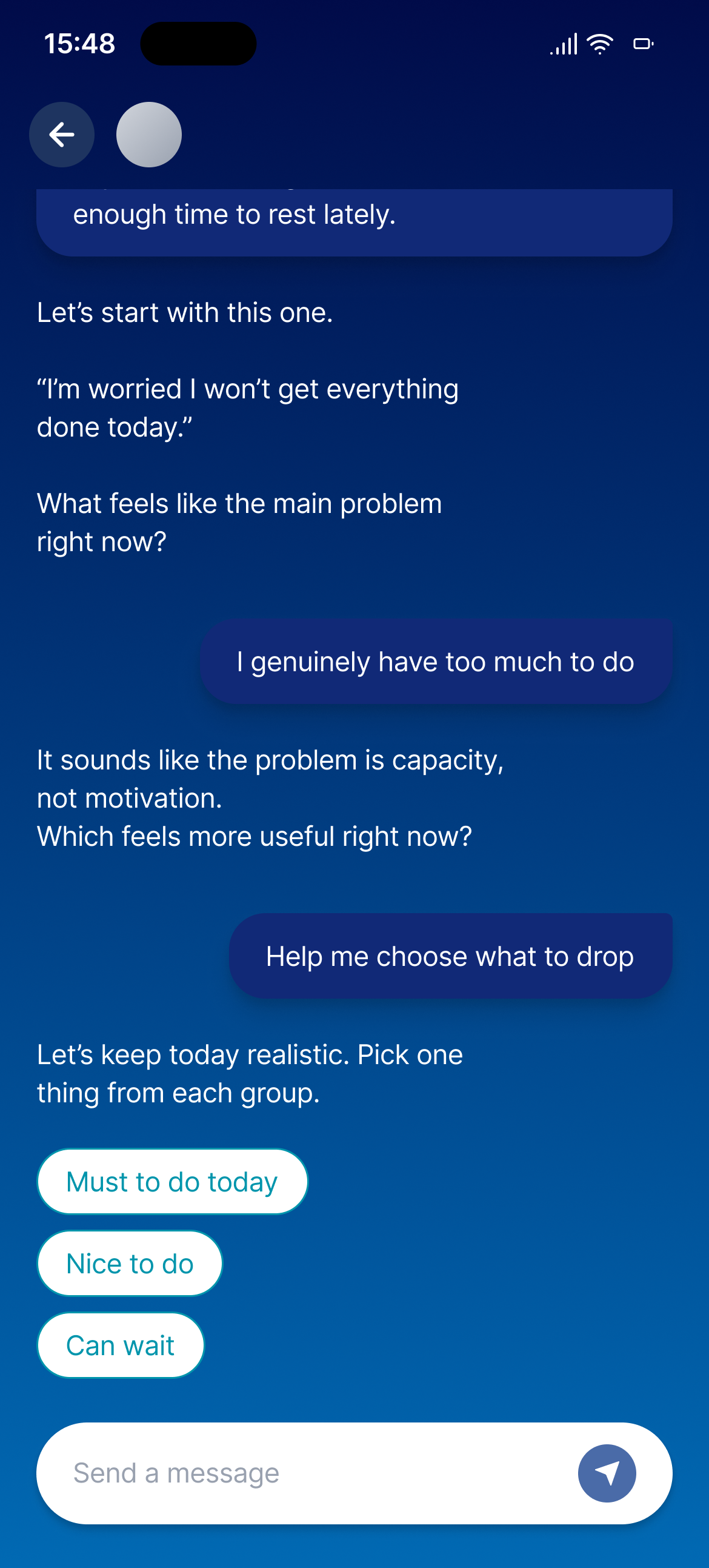
  • Improvement 1.

    Give users stronger direction

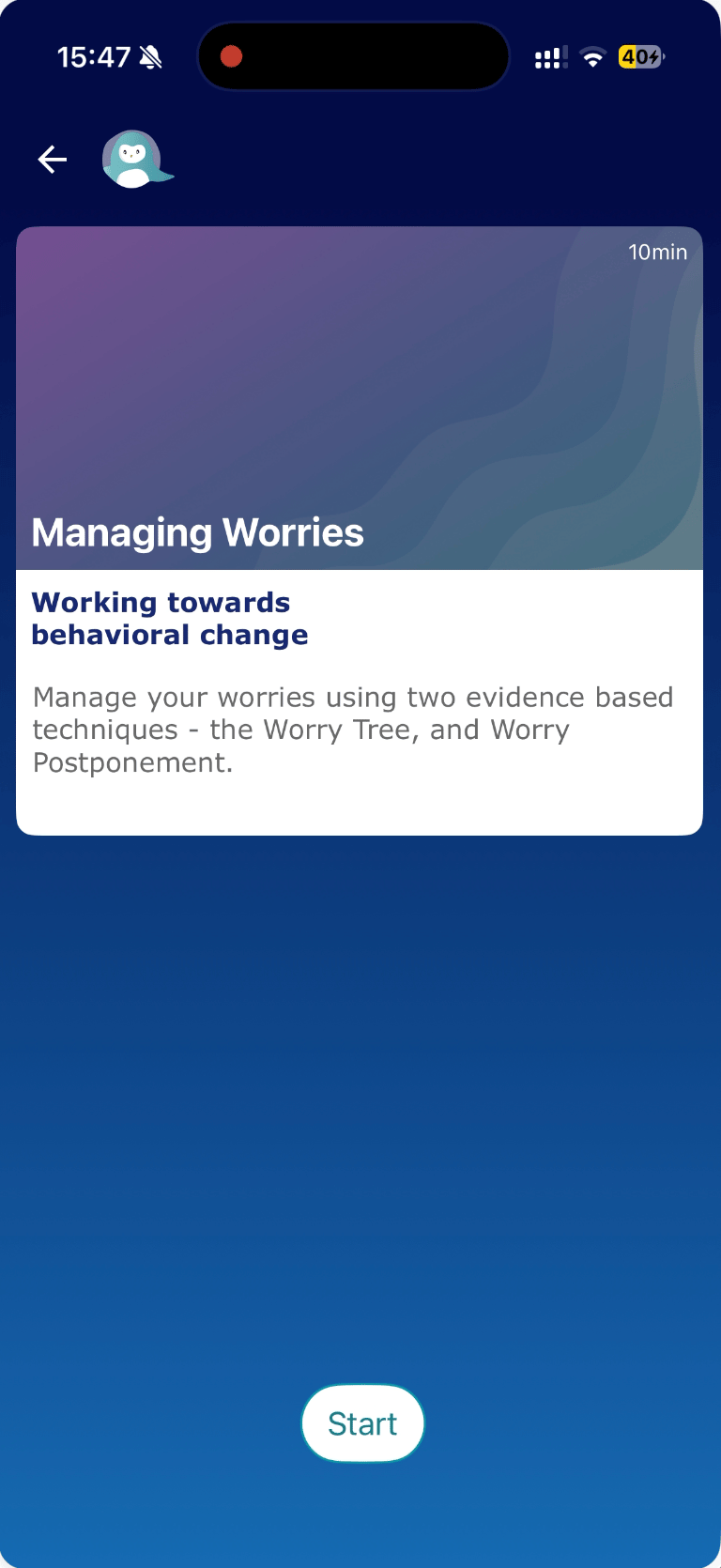
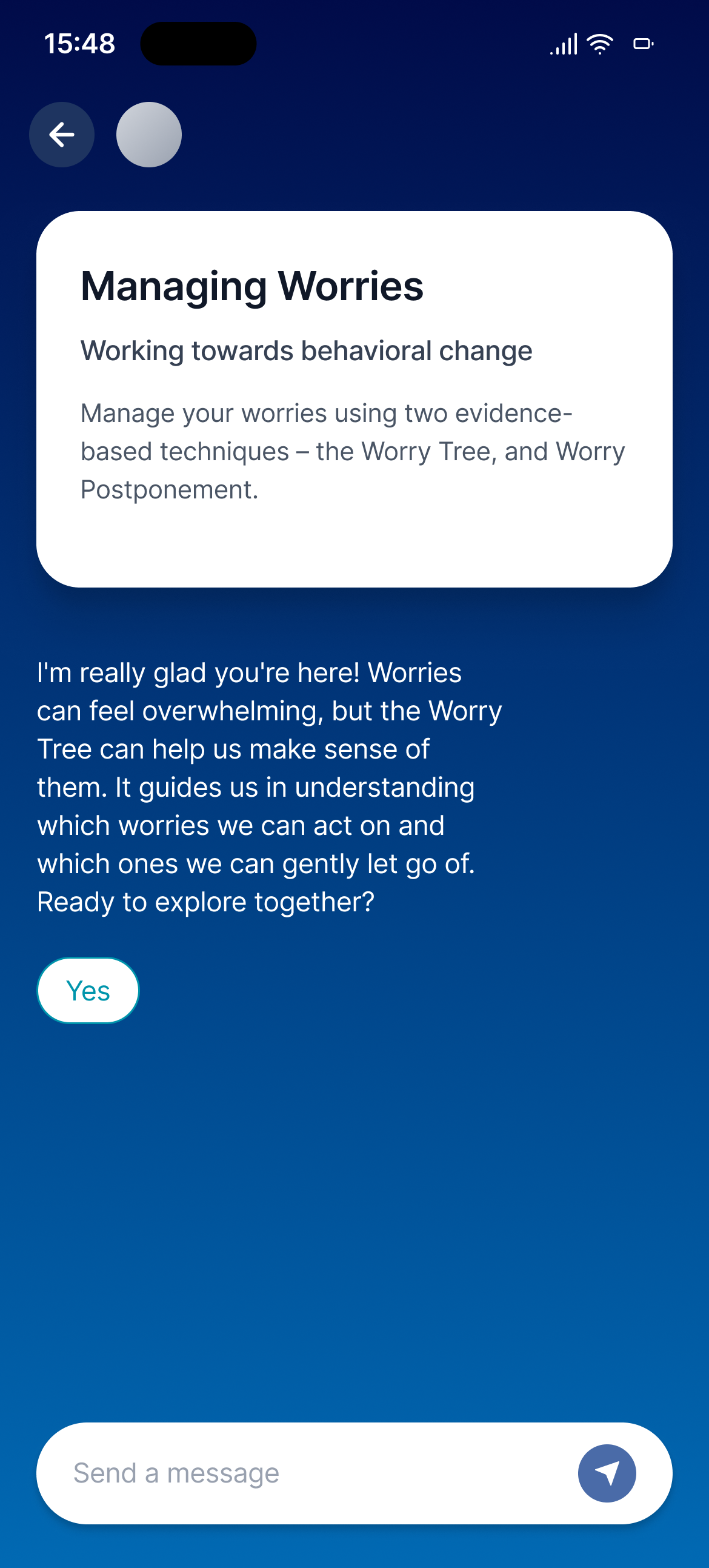
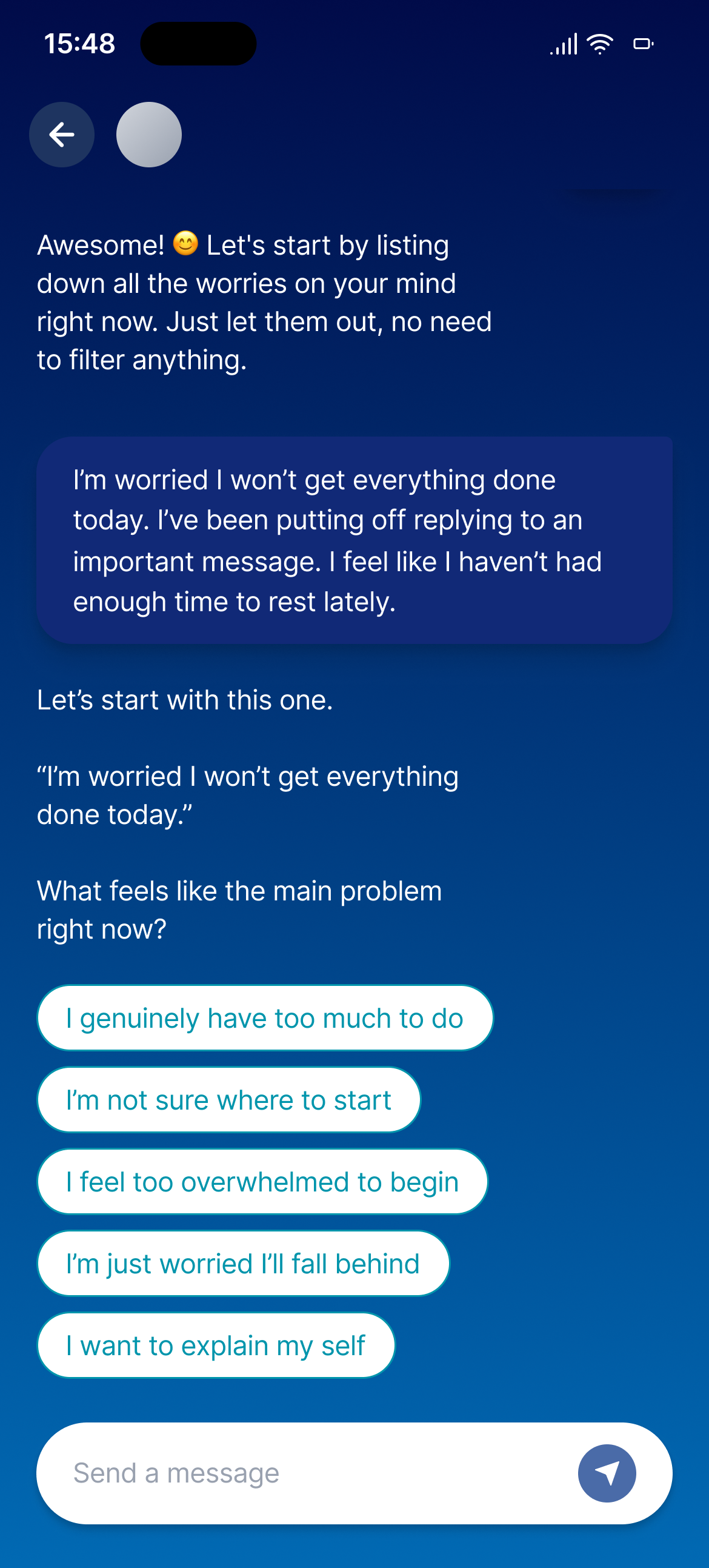
  • AI conversation - Manage Worries

    Instead of asking users to generate every response on their own, the AI provides clear and structured guidance throughout the conversation.

    Use quick-select responses

    For simple questions, users can select a suggested response button instead of typing each answer.

    Help users identify the cause

    The AI presents possible reasons behind the user’s concern, while still allowing them to type their own response.

    Guide users towards a clear priority

    Once the issue is identified, the AI helps users decide what needs attention first and manageable next step.

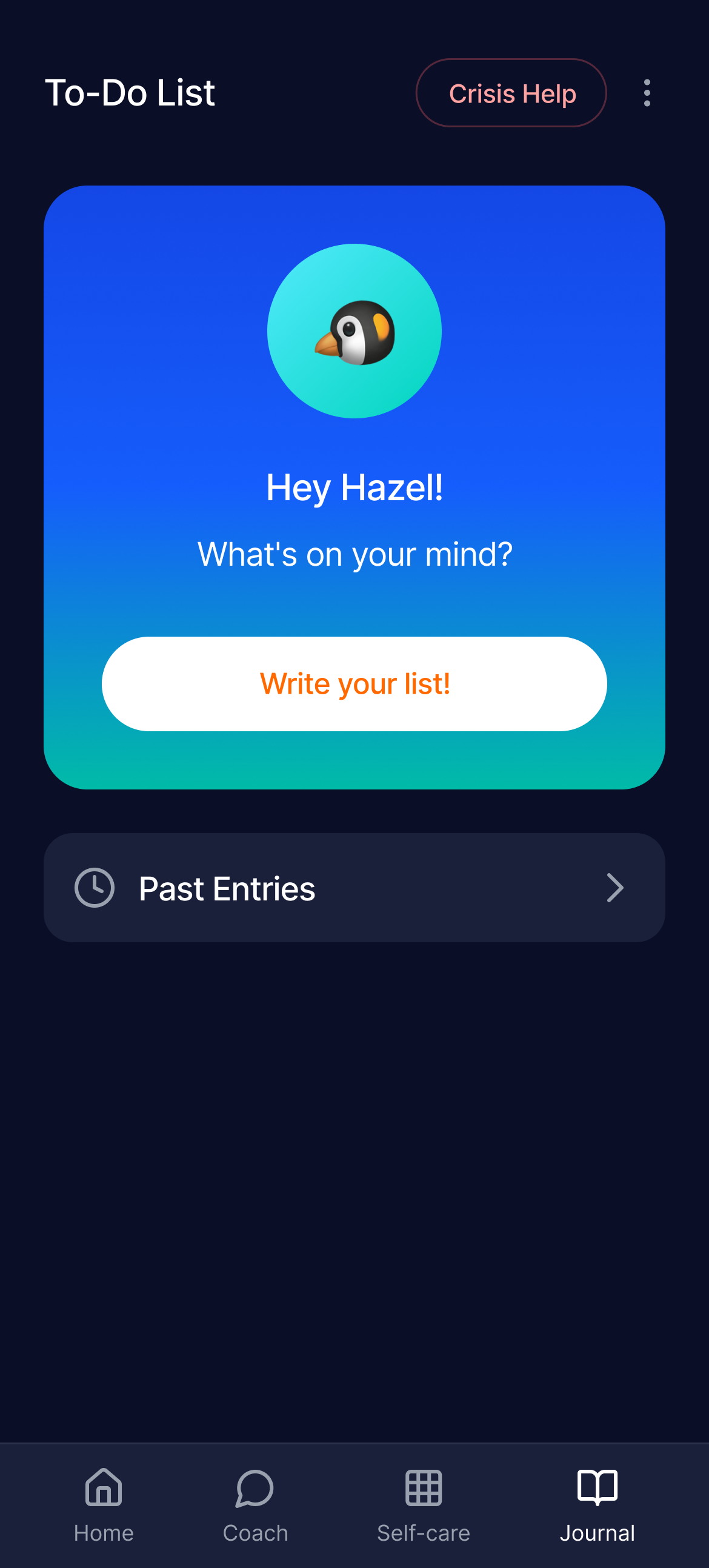
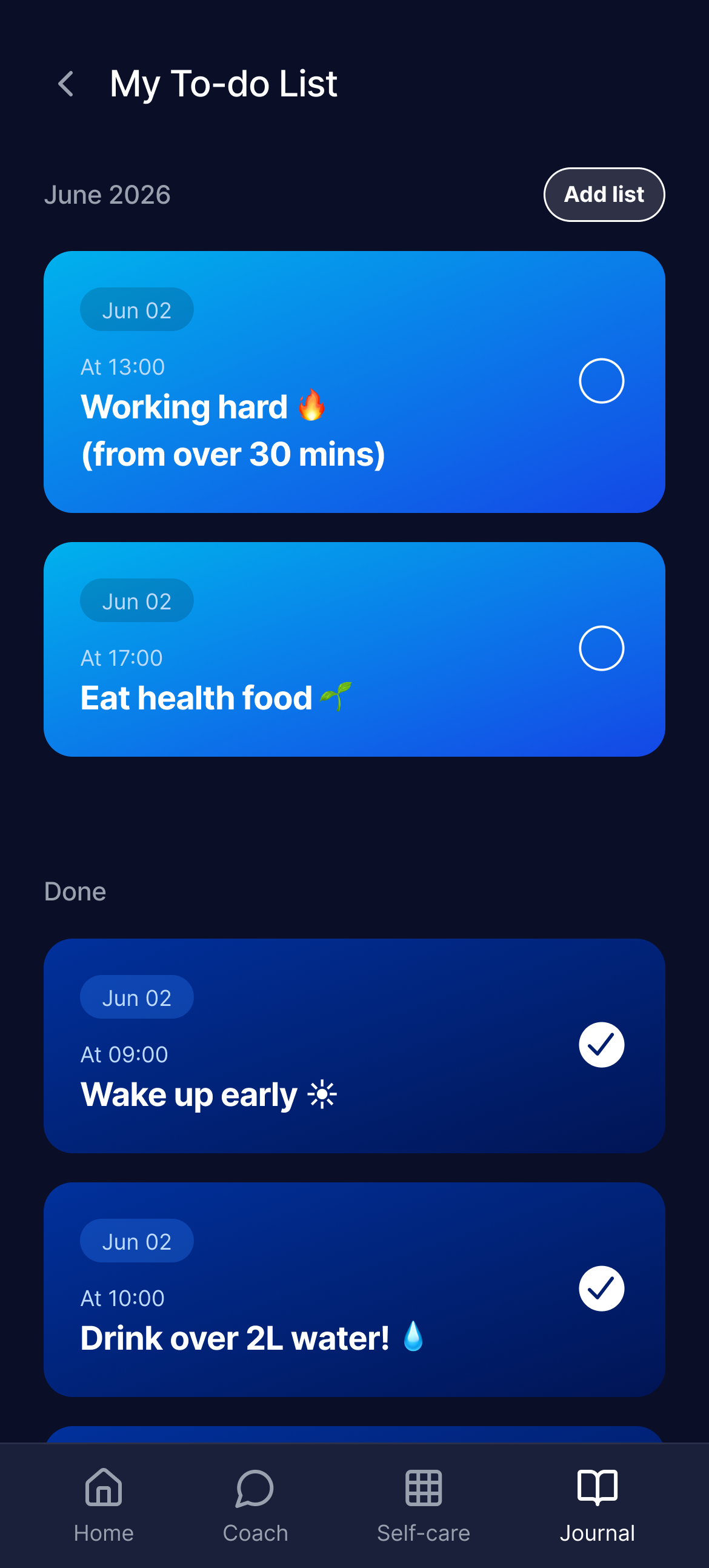
  • Improvement 2.

    Turn reflection into achievable action

  • Journal

    Instead of asking users to generate every response on their own,

    the AI provides clear and structured guidance throughout the conversation.

    Guidance into actionable tasks

    In journal, instead of summary, encourage actions through the to-do list. User can add their list or get suggestion from previous chat.

    Allow users to personalise their daily plan

    To-do list helps them create a realistic plan based on their individual needs.

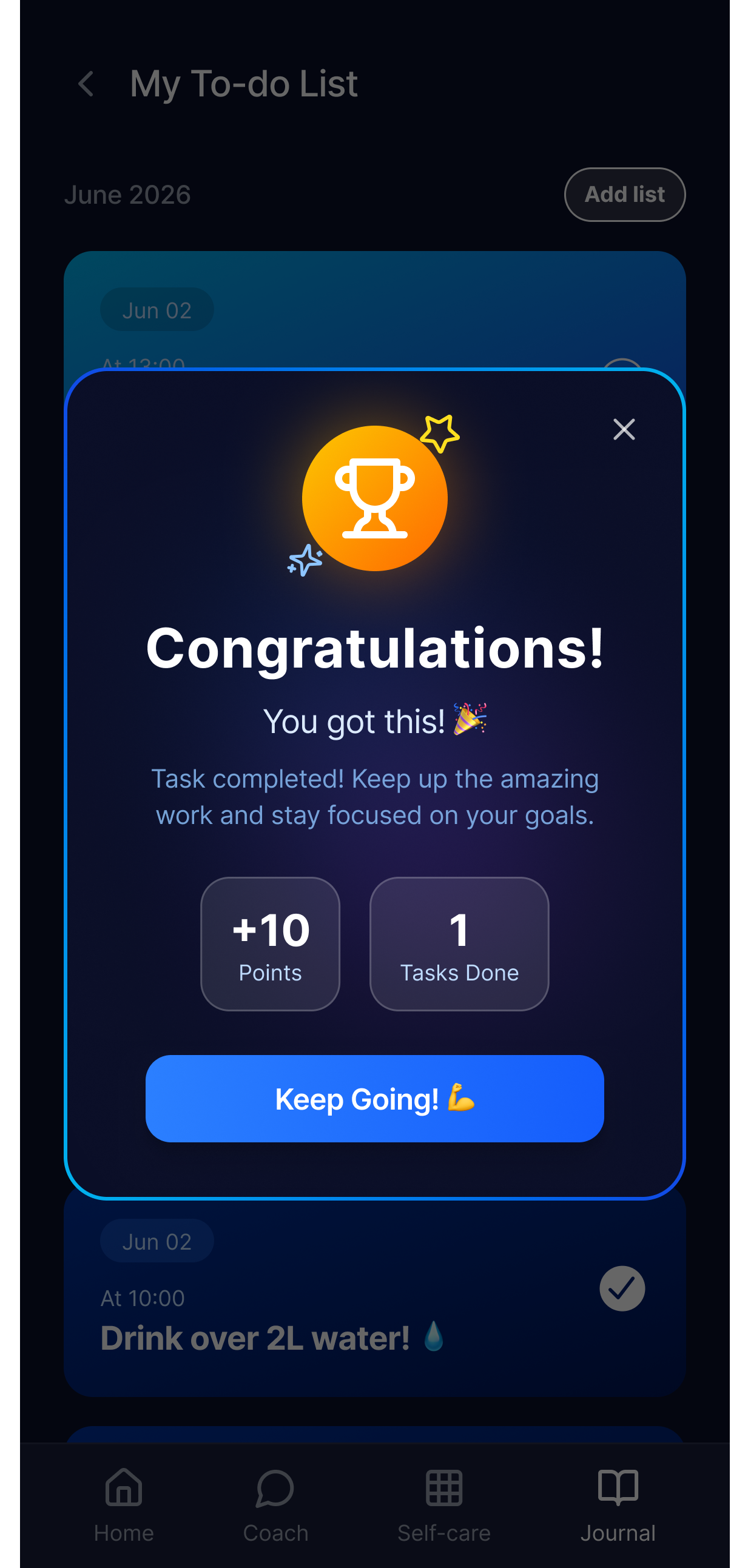
    Make small achievements feel rewarding

    Completing a task provides immediate positive feedback and points that can be used to unlock items or free mental session.

Initial pilot testing

In an initial test with one participant, the redesigned button-led flow reduced the time required to identify a first priority from 4m 31s to 1m 21s.

The participant also required fewer written responses and found it easier to reach a manageable next step.

  • Testing Result

  • Product
    Original Flow
    Redesigned Flow
    Time required to identify the first priority

    4m 31s

    1m 21s

    Number of typed responses

    12

    1

    Total number of interactions

    13

    5

    Additional support required

    Yes

    Yes

The redesigned flow helped the participant reach a manageable next step more quickly and required fewer written responses.

The participant commented:

“It’s better if the user don’t want to think too much.”

Although further testing with more participants is needed, this initial result suggests that structured response options may reduce cognitive effort and help users move from reflection to action more efficiently.

Reflection

This redesign aims to reduce the effort required during emotionally overwhelming moments by providing suggested responses and a clearer path towards action.

However, the button-led flow introduces a trade-off. While Hick’s Law suggests that fewer choices make decisions easier, the redesigned experience provides a limited number of suggested responses so users do not need to generate every answer by themselves.

This may help users reach a clear next step more quickly, but the options still require time to read and compare. Further testing is needed to identify the right number of choices at each stage.

The concept may also require sophisticated backend logic to interpret concerns accurately and provide relevant guidance. The system would need to consider clear clinical boundaries, safety guidelines, and regulatory requirements, particularly if the guidance could be interpreted as mental health treatment or medical advice.

Despite these challenges, the concept highlights an opportunity for digital wellbeing products to balance emotional reflection with clearer and more actionable support.

Hazel Kim

Product Designer

Hazel Kim

Hazel Kim

User Experience

Case Study

June 3, 2026

Making Emotional Support

More Actionable

A UX Case Study of Wysa with Comparative Insights from Headspace and Finch

An illustrative sketch of a flower

How might we help emotionally overwhelmed users receive support without requiring too much effort?

This case study examines emotional support flows in digital wellbeing apps, with a focus on Wysa, an AI-powered conversational wellbeing platform.

The case study presents the existing user flow, identified UX problems, proposed improvements, user testing, and reflection.

Why I choose Wysa

The digital wellbeing market is growing rapidly, and many services are introducing AI-assisted features to make emotional support more accessible.

I chose Wysa because its conversational interface uses AI as the core experience, allowing users to reflect on their feelings and access relevant self-care tools.

Wysa

AI-powered mental health and wellness app

Wysa is an AI-powered emotional wellbeing chatbot designed to provide users with a private space to talk through thoughts and emotions.

Through text-based conversation, the service responds to users’ concerns and offers tools intended to support emotional regulation, and everyday mental wellbeing.

Light Market Context:

Digital Mental Health

  • Wysa

    AI-powered emotional support through guided conversations.

  • Headspace

    Mindfulness and sleep support through guided content.

  • Finch

    Gamified self-care through daily goals and virtual rewards.

  • Comparison Section

  • Product
    Approach
    Relevant Strength
    Limitation
    Wysa

    AI-supported emotional conversation

    Users can express thoughts and emotions through text

    Chat flow may still require effort and feel generic

    Headspace Ebb

    AI reflection with personalised content recommendations

    Integrated into a polished wellbeing ecosystem

    Primarily connects conversation to existing content

    Finch

    Gamified self-care through goals and a virtual pet

    Makes self-care feel lightweight and approachable

    Closer to habit tracking than deeper emotional processing

  • Existing Feature Flow

    AI conversation · Guided self-care tools · Optional human support

  • Main Features

    The home screen suggests guided activities

    Coach

    Offers access to trained coaches.

    Library

    Allows users to explore guided activities.

    My Journal

    provides summary of conversations

  • AI conversation

    Wysa basically provides the guide how to manage thoughts and feeling in the every functions.

    1. Share the worries

    2. Give specific explanation

    3. Get self-care routines

Problem Space

Endless Conversation

Wysa encourages users to reflect on their emotions through text-based conversation. However, the chatbot encourages users to generate their own solutions and it took much more time compare to other AI apps such as ChatGPT.

UX Principle: Reduce Cognitive Load, Tesler’s Law

Generic and Repetitive Responses

Wysa provides an accessible space for users to reflect on their feelings, but AI responses sometimes feels impersonal and repetitive.

UX Principle: User Control and Freedom

Limited Support Options

Users may need different types of support depending on their emotional state. Some may want to talk freely, while others may prefer rest or a simple task. However, the current flow does not clearly distinguish between these needs. So when I felt tired, just small responding was also so much burden.

UX Principle: User Control and Freedom and Visibility, Hick’s Law

Opportunities

Support Mode

Allow users to choose whether they want a practical next step, or a deeper reflection.

Suggest Options

Introduce options to help users access relevant support more quickly.

Encourage Actions

Provide the tasks based on the conversation, not just a summary.

  • Improvement 1.

    Give users stronger direction

  • AI conversation - Manage Worries

    Instead of asking users to generate every response on their own, the AI provides clear and structured guidance throughout the conversation.

    Use quick-select responses

    For simple questions, users can select a suggested response button instead of typing each answer.

    Help users identify the cause

    The AI presents possible reasons behind the user’s concern, while still allowing them to type their own response.

    Guide users towards a clear priority

    Once the issue is identified, the AI helps users decide what needs attention first and manageable next step.

  • Improvement 2.

    Turn reflection into achievable action

  • Journal

    The AI converts the outcome of each conversation into a manageable task that users can add directly to their daily to-do list.

    Guidance into actionable tasks

    In journal, instead of summary, encourage actions through the to-do list. User can add their list or get suggestion from previous chat.

    Allow users to personalise their daily plan

    To-do list helps them create a realistic plan based on their individual needs.

    Make small achievements feel rewarding

    Completing a task provides immediate positive feedback and points that can be used to unlock items or free mental session.

Initial pilot testing

In an initial test with one participant, the redesigned button-led flow reduced the time required to identify a first priority from 4m 31s to 1m 21s.

The participant also required fewer written responses and found it easier to reach a manageable next step.

  • Testing Result

  • Product
    Original Flow
    Redesigned Flow
    Time required to identify the first priority

    4m 31s

    1m 21s

    Number of typed responses

    12

    1

    Total number of interactions

    13

    5

    Additional support required

    Yes

    Yes

The redesigned flow helped the participant reach a manageable next step more quickly and required fewer written responses.

The participant commented:

“It’s better if the user don’t want to think too much.”

Although further testing with more participants is needed, this initial result suggests that structured response options may reduce cognitive effort and help users move from reflection to action more efficiently.

Reflection

This redesign aims to reduce the effort required during emotionally overwhelming moments by providing suggested responses and a clearer path towards action.

However, the button-led flow introduces a trade-off. While Hick’s Law suggests that fewer choices make decisions easier, the redesigned experience provides a limited number of suggested responses so users do not need to generate every answer by themselves.

This may help users reach a clear next step more quickly, but the options still require time to read and compare. Further testing is needed to identify the right number of choices at each stage.

The concept may also require sophisticated backend logic to interpret concerns accurately and provide relevant guidance. The system would need to consider clear clinical boundaries, safety guidelines, and regulatory requirements, particularly if the guidance could be interpreted as mental health treatment or medical advice.

Despite these challenges, the concept highlights an opportunity for digital wellbeing products to balance emotional reflection with clearer and more actionable support.